Biogas & Biomethane
Measure gas production, methane potential and process behaviour in laboratory based biogas, biomethane and RNG tests. BPC Instruments provides automated systems for feedstock evaluation, BMP tests, SMA assays, residual gas potential analysis, inhibition testing and continuous anaerobic digestion studies.
- Feedstock Quality Control
- BMP and SMA testing
- Automated gas measurement

Trusted by laboratories, research institutes and industrial customers worldwide.











Laboratory testing for better biogas decisions
Biogas production depends on the behaviour of feedstocks, microorganisms and process conditions. Laboratory testing helps evaluate methane potential, compare substrates and study how a process responds before changes are made on a larger scale.
BPC Instruments provides automated systems for measuring gas volume, gas flow and methane potential in anaerobic batch and continuous fermentation tests. The systems are used by universities, research institutes, biogas laboratories, plant operators and industrial companies working with organic waste, digestate, sludge, manure, food waste and other biomass streams.
What do you need to evaluate?

Feedstock potential
Determine the BMP of organic substrates and compare expected biomethane yields before plant scale use.

Substrate comparison
Compare feedstocks, mixtures or pretreatments under controlled anaerobic batch conditions.

Biological activity
Assess anaerobic sludge or inoculum activity through specific methanogenic activity (SMA) testing.

Residual gas potential
Measure remaining gas production from digestate, often at low gas volumes over longer incubation periods.

Inhibition effects
Evaluate how substances, substrate mixtures or operating conditions affect anaerobic microbial activity.

Process behaviour
Run continuous anaerobic digestion studies to evaluate loading rate, retention time, feeding strategy and process stability.
Batch or continuous testing?
Different biogas/RNG questions require different laboratory setups. Batch tests are used when substrates, inoculum activity or inhibition effects are compared under controlled conditions. Continuous tests are used when the process itself needs to be studied over time.
Batch testing


Used for BMP tests, SMA assays, residual gas potential analysis and inhibition studies. Batch testing is well suited when the goal is to compare samples, screen feedstocks or evaluate methane potential under standardised laboratory conditions.
Continuous testing
Used for continuous anaerobic digestion studies, process simulation and long term evaluation of operating conditions. Continuous testing is well suited when the goal is to study loading rate, retention time, feeding strategy, feedstock mixtures or process stability.

Instruments for biogas and biomethane testing

AMTPS® III
Industry leading automated analytical platform for BMP, SMA and residual gas potential testing.

Gas Endeavour® III
For automated gas production and consumption analysis in batch fermentation and biological process studies.
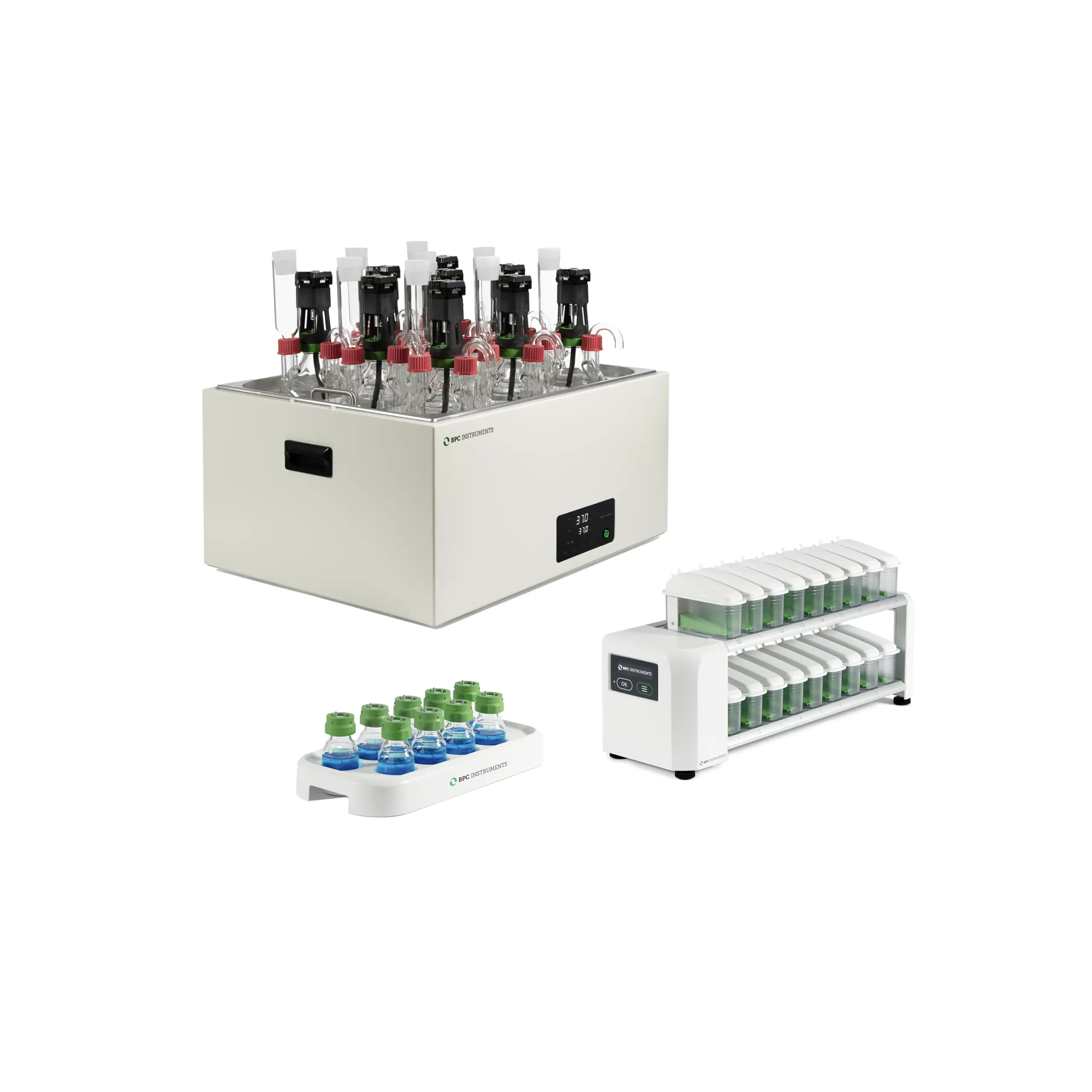
BioReactor Simulator (BRS) III
Laboratory scale system for continuous anaerobic digestion studies and process simulation.

BPC® Go
A compact gas volume and flow meter for precise low flow measurements in laboratory applications.
Related news and articles


Common questions about biogas testing
Find answers to common questions about BMP testing, feedstock evaluation, SMA assays, residual gas potential and gas measurement in laboratory based biogas analysis.
What is a BMP test in biogas production?
A BMP test, or biochemical methane potential test, measures how much methane an organic substrate can produce under anaerobic conditions. It is widely used in biogas and biomethane production to evaluate feedstocks, compare substrate mixtures and estimate potential gas yield before larger scale use.
Why is BMP testing used for feedstock quality control?
BMP testing helps determine the biochemical methane potential of a feedstock before it enters a biogas process. Data generated by the test supports decisions on substrate selection, feedstock pricing, process suitability and expected methane yield.
What is the difference between BMP, SMA and RGP testing?
BMP testing measures the methane potential of a substrate. SMA testing, or specific methanogenic activity testing, measures the activity of anaerobic sludge or inoculum. RGP testing, or residual gas potential testing, measures the remaining gas production from digestate or other material after the main digestion process.
What does VS mean in a BMP test?
VS stands for volatile solids and is an estimate of the organic content of a sample. For BMP testing, VS is commonly used to calculate the amount of substrate and inoculum added to each reactor, together with the selected inoculum to substrate ratio.
When should batch testing be used vs continous testing in biogas analysis?
Batch testing is used when samples need to be compared under controlled laboratory conditions. It is commonly used for BMP tests, SMA assays, residual gas potential analysis and inhibition studies.
Continuous anaerobic digestion testing is used when the process needs to be studied over time. It is suitable for evaluating organic loading rate, hydraulic retention time, feeding strategy, substrate mixtures and long term process stability.
Can BPC’s instruments measure both biomethane and total biogas?
Yes. AMPTS® III can measure accumulated biomethane when carbon dioxide is removed using the CO₂ absorption unit. Without the CO₂ absorption unit, the system can be used to measure total biogas.
Which BPC instrument is used for BMP testing?
AMPTS® III is BPC’s main system for automated BMP testing. It is also used for SMA assays, residual gas potential analysis, inhibition studies and anaerobic biodegradability testing.
Related scientific references
-

Synergistic valorization of crop residues and dairy wastewater via biochar-mediated anaerobic digestion enhancement
Lan, T., Wen, Y., Tong, L. Ergu, A., Zhang, L., Wu, D., Xing, A., Hong, M.Biomass and Bioenergy (2026) 212
Biomethane, WastewaterJournal article2026 -
Cellulolytic fungi from sewage sludge and their potential to improve methane fermentation
Ćwiertniewicz-Wojciechowska, C., Cema, G.,Ziembińska-Buczyńska, A.Biomass Conversion and Biorefinery (2026) 16:145
BiomethaneJournal article2026 -
Effect of harvesting interval on biogas production from Napier grass
Shah, J., Senapathy, G. J., Bisht, A., Bhagat, M. S., Rasheed, M. A.Energy, Ecology and Environment (2026), 1-15
BiomethaneJournal article2026 -
Reliable biochemical methane potential testing: insights and recommendations from global interlaboratory study
Hafner, S. D., Leca, E., Sambusiti, C., Astals, S., Azam, O., Koch, K., Liu, J., Møller, H. B., Nistor, M., Olaya-Rincon, M., Peyrelasse, C., Ward, A. J., Zennaro, B., Monlau, F. Bioresource Technology (2026) Volume 446
BiomethaneJournal article2026

Contact our experts
Have a question about our instruments, applications, or an ongoing project?
Send us a message using the form and include a few details, such as your organisation and country, so we can route your enquiry efficiently. We’ll get back to you as soon as we can.
For urgent matters, please call us on +46 (0) 46 16 39 50.
"*" indicates required fields